Pretrial supervision
Pretrial Defendant Monitoring Systems: GPS & Electronic Supervision Programs
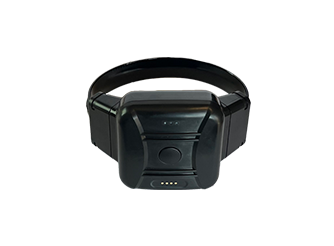
Pretrial defendant monitoring systems from a bail bond perspective
Pretrial defendant monitoring systems sit at the intersection of courts, pretrial services, private supervision vendors, and the bail bond industry. When a judge orders location accountability before trial, someone must enroll the defendant, install the ankle monitor, configure geofences, pay cellular bills, and respond to alerts at 2:00 a.m. In many counties, a pretrial monitoring program run by a government office or contracted vendor handles the day-to-day platform work—but the bail bond agency still carries financial exposure if the defendant fails to appear. That split responsibility is why bondsmen and bondswomen need fluency in how pretrial monitoring actually works, not just the bond paperwork.
This guide explains pretrial monitoring architecture in plain language: what a GPS ankle monitor contributes to supervised release, how an electronic ankle bracelet differs from smartphone check-ins, and how bail professionals should coordinate with monitoring companies so compliance is provable in court. We also unpack cost-to-defendant dynamics—who pays daily fees, what drives hidden labor costs, and when a “cheap” ankle monitor program becomes expensive through false tamper storms or chronic charging failures.
For foundational reading, start with understanding ankle monitor technology on ankle-monitor.com, then pair it with our bail bond GPS monitoring pillar and the pretrial-focused hub at GPS tracking pretrial services. Equipment procurement teams should bookmark GPS ankle monitor equipment guide for a buyer-agnostic checklist that still applies when your county vendor sources hardware.
Who operates pretrial monitoring: courts, vendors, and bail stakeholders
Most pretrial monitoring workflows involve at least four actors: the judge who sets conditions, pretrial services or probation staff who may supervise the case plan, a private electronic monitoring (EM) vendor who supplies the GPS ankle monitor and software, and the defense/surety ecosystem that includes bail bond agencies when a surety bond is posted. Some jurisdictions fund pretrial monitoring entirely with public dollars; others assign daily user fees to defendants. A growing number of hybrid models bill defendants but cap fees based on ability to pay policies—details vary by courthouse, so always verify local administrative orders.
Bail bond professionals should map “who owns the alert queue” on day one. If pretrial services owns escalation, your agency still needs read access or timely summaries—otherwise you discover violations from a clerk’s phone call. If your shop contracts directly with an EM vendor for a parallel ankle monitor, ensure contracts do not conflict with court-only vendors. Duplicative electronic ankle bracelet assignments confuse defendants and create dueling maps in hearings.
When pretrial monitoring is court-ordered, treat the GPS ankle monitor as part of the bond’s operational risk stack alongside cosigner contact data, employment verification, and travel passes. Document handoffs: device serial numbers, reporting intervals, active exclusion zones, and the monitoring company’s after-hours line. That packet protects you if opposing counsel claims you “did nothing” after release.
Technology inside pretrial GPS and electronic ankle bracelet programs
A modern pretrial monitoring stack typically pairs a body-worn ankle monitor with a cloud platform that ingests location reports, tamper flags, and battery telemetry. High-reliability programs favor GPS ankle monitor hardware that combines multi-constellation GNSS with WiFi and cellular LBS assists so indoor plots remain intelligible near apartments, hospitals, and downtown cores. Legacy two-piece kits separate an electronic ankle bracelet beacon from a pocket cellular unit defendants must charge nightly—operationally brittle for pretrial monitoring populations already under stress.
One-piece architectures integrate radios, battery, strap integrity sensors, and GNSS into a single waterproof module. Manufacturer-published examples such as the CO-EYE ONE cite 108g weight, IP68 sealing, sub-2-meter-class outdoor accuracy with multi-band GNSS assists, LTE-M/NB-IoT connectivity, roughly seven-day standalone battery life at conservative cellular reporting intervals, tool-free installation in seconds, and fiber optic tamper detection in strap and case marketed as zero false-positive for cut events. Use those figures as diligence benchmarks—not universal truths—when you evaluate any GPS ankle monitor proposed for pretrial monitoring.
Software expectations for pretrial monitoring include polygon geofences, victim buffer zones, scheduled inclusion windows for work, court-ready PDF exports with UTC timestamps and device identifiers, role-based access for prosecutors/defense (where permitted), and alert routing that distinguishes technical dropouts from behavioral breaches. If the platform cannot label assisted fixes (LBS/WiFi) versus pure GNSS, expect more contested hearings over ambiguous ankle monitor maps.
REFINE ID remains vendor-neutral: pilot hardware in your county’s RF environment before standardizing. Cross-train staff using resources and the deep dives on ankle-monitor.com linked above so everyone shares vocabulary about the electronic ankle bracelet category.
How bail agents and bondsmen interact with pretrial monitoring programs
Bail bond agents are not merely check writers—they are often the first call when a defendant’s ankle monitor chirps at midnight. Even when pretrial services “owns” supervision, sureties have a financial incentive to ensure the GPS ankle monitor remains charged, correctly strapped, and legally compliant with court orders. Professional bondsmen build relationships with monitoring company dispatchers, request weekly summary emails for high-exposure bonds, and maintain cosigner escalation lists separate from government queues.
Practical interaction patterns include: (1) attending installs for high-dollar bonds to witness strap fit and live map confirmation; (2) requesting defendant-facing quick-start cards that explain shower rules, charging (if applicable), and emergency contacts; (3) logging every court modification to geofences the same day the order is filed; (4) coordinating with defense counsel when travel passes are needed so the pretrial monitoring platform reflects reality before the defendant drives; (5) preserving export packets in bond files for forfeiture defense.
When bondsmen also sell or bundle pretrial monitoring, disclose pricing transparently and comply with state insurance and consumer regulations—this article is informational, not legal advice. Ethical bundling aligns incentives: a reliable GPS ankle monitor reduces failure-to-appear (FTA) risk, which protects the surety and the defendant’s liberty. For narrative context on supervised release outcomes, research literature such as Florida analyses of electronic monitoring programs often cited for roughly 31% recidivism reduction in monitored cohorts versus comparison groups—recidivism and FTA differ, but the lesson is consistent: structured accountability changes behavior.
Continue reading on GPS ankle monitor pretrial release and bail bond GPS monitoring costs for case-style examples and fee modeling templates tied to bail bond workflows.
Compliance requirements defendants—and agencies—must respect
Pretrial monitoring conditions frequently include home curfews, exclusion zones around victims or schools, association bans, and travel restrictions. The electronic ankle bracelet enforces those rules digitally, but human processes enforce them legally. Compliance means timely responses to tamper alerts, accurate roster data (phone numbers that actually ring), and documented attempts to contact defendants before seeking warrants.
Common compliance pitfalls: defendants who swap phones without updating assisted-location profiles; cosigners who unplug home base stations; GPS ankle monitor units with outdated firmware; monitoring companies that batch alerts slowly; and defense counsel who never receive the same dashboard view as pretrial services. Run tabletop exercises quarterly—simulate a strap cut, an airport geofence approach, and a multi-hour cellular outage—to test whether your pretrial monitoring escalation matrix holds up.
Chain-of-custody discipline applies to exports. If your bail bond agency pulls location history, record who downloaded it, when, and under which user account. Courts increasingly scrutinize ankle monitor metadata after high-profile errors. When in doubt, coordinate discovery through counsel.
Cost-to-defendant analysis: daily fees, labor, and forfeiture math
Public conversations about pretrial monitoring focus on daily user fees—often cited between roughly $5 and $25 per day depending on risk tier, region, and bundled services—but the true cost-to-defendant picture includes activation charges, installation mileage, late-payment penalties, and lost wages from missed shifts when defendants must wait hours for technician windows. For sureties, the cost picture includes staff time investigating false tamper alerts, overnight shipping for replacement GPS ankle monitor hardware, and the catastrophic tail risk of bond forfeiture.
Model a scenario: a $25,000 bond with a 10% premium puts $2,500 revenue on the table, while a single forfeiture can erase multiples of that if collateral is thin. A pretrial monitoring program charging $15/day for 120 days sums $1,800—material, but smaller than one avoided forfeiture. Now add labor: if an inferior electronic ankle bracelet triggers three false tampers weekly at 45 minutes each to investigate, you are burning roughly nine staff hours monthly—often more expensive than the hardware delta between commodity and premium ankle monitor tiers.
Ability-to-pay policies may reduce public pretrial monitoring fees but rarely eliminate third-party vendor minimums. Bail bond agencies should publish clear explanations so defendants understand what the GPS ankle monitor fee buys: cellular data, platform licensing, 24/7 staffing, and equipment depreciation. Transparency reduces disputes that lead to nonpayment and silent noncompliance.
Court reporting, maps, and evidence hygiene
Judges expect pretrial monitoring exhibits to explain not only where the defendant was, but how the ankle monitor knew. Export packets should include device ID, firmware version, fix type, dilution-of-precision metrics when available, and notes on assisted indoor positioning. If a breach allegation hinges on five meters of ambiguity, defense will attack a sloppy GPS ankle monitor printout.
Best practice: standardize cover sheets for hearings listing bond number, counsel names, monitoring vendor, and a chronology of material alerts. Attach full traces rather than cropped screenshots. Highlight strap integrity events separately from movement events so fiber-based tamper narratives on advanced electronic ankle bracelet hardware are not conflated with routine satellite fade.
Coordinating with monitoring companies without owning their mistakes
Even excellent pretrial monitoring vendors have outages. Your bail bond operation should contractually or memorandum-of-understanding clarify data-sharing, after-hours contacts, and whether you receive parallel alerts. If a vendor delays notifying you of an exclusion breach, your diligence story weakens in forfeiture proceedings—document gaps.
Vendor scorecards belong in quarterly business reviews: mean alert latency, false tamper rates, RMA turnaround, spare inventory depth, and training freshness. Push vendors to justify architecture choices—why a given GPS ankle monitor for pretrial monitoring beats alternatives on battery, tamper integrity, and indoor behavior in your county.
Risk scenarios: flight precursors, victim proximity, and technical traps
Flight precursors sometimes appear as subtle pattern breaks: charging routines that stop, sudden nocturnal movement away from established anchors, or repeated loitering near transit hubs. A quality ankle monitor program pairs automated hints with human judgment—call defendants early, involve cosigners, and notify counsel when appropriate.
Victim proximity alerts demand geographic precision. Sub-2-meter-class GPS ankle monitor performance outdoors helps reduce false alarms when defendants live in dense neighborhoods. Configure buffers thoughtfully; over-tight geofences manufacture violations.
Technical traps include SIM mis-provisioning, platform timezone errors, and defendants who factory-reset phones used for BLE-assisted modes. Train help desks to triage before panic. The goal of modern pretrial monitoring is fewer cry-wolf episodes and faster truth when risk is real.
Implementation checklist for agencies interfacing with pretrial programs
Use this checklist when onboarding any new pretrial monitoring partnership: verify court order language matches platform geofences; confirm defendant contact hierarchy; test live maps from the courthouse parking lot; audit alert sounds on night phones; print defendant quick-start guides; schedule 48-hour compliance calls; log device serials in bond files; train staff on understanding ankle monitor technology; and align procurement with GPS ankle monitor equipment guide criteria so upgrades are evidence-driven, not brochure-driven.
Return to GPS tracking pretrial services for adjacent workflows, and keep resources bookmarked for templates. Strong bail bond shops treat electronic ankle bracelet logistics as core operations—not an afterthought sold from a pamphlet.
Data sharing, discovery, and third-party access in pretrial monitoring
Pretrial monitoring generates sensitive location histories. Prosecutors, defense counsel, pretrial officers, and sometimes bail bond sureties may each assert legitimate needs for overlapping slices of the same GPS ankle monitor dataset. Your policy stack should define who may request exports, in what format, on what timeline, and under what authentication rules. Verbal summaries over the phone are a liability; authenticated PDFs or portal downloads with audit trails are the baseline.
When sureties request parity with government dashboards, negotiate read-only roles rather than screenshot forwarding. Screenshots omit metadata defense counsel needs—and may omit metadata prosecutors will challenge. A disciplined approach treats the ankle monitor platform like evidence infrastructure, not a consumer fitness tracker.
Minimize data retention beyond statutory requirements, but do not delete records subject to litigation holds. Train staff to recognize hold letters and freeze electronic ankle bracelet archives accordingly. Cross-border cases may implicate additional privacy rules; consult qualified counsel when defendants travel or when servers reside outside your state.
Interagency MOUs should spell out breach notification duties. If a pretrial monitoring vendor leaks credentials, defendants and victims may face stalking risks. Rapid rotation of passwords, session revocation, and public communication plans belong in your incident playbooks alongside technical remediation.
Special populations: language access, disability, and housing instability
Pretrial monitoring succeeds when defendants understand the rules. Provide ankle monitor instructions in languages defendants actually speak, not only English PDFs “available upon request.” Field installers should carry quick-start cards and short videos covering charging (for two-piece GPS ankle monitor kits), shower expectations for IP68 devices, and 24/7 help numbers.
Disability accommodations may include dermatologist-approved strap liners, alternate fit schedules, or court orders adjusting curfew rigidity when medically necessary—always document judge approval before altering electronic ankle bracelet configurations. Housing instability complicates home plans; some defendants couch-surf legally while complying. Geofencing must reflect realistic anchors, not idealized single-address fantasies, or your pretrial monitoring program will manufacture false violations.
Youthful defendants and elderly defendants may need cosigner triads: parent, surety, and monitoring company on a three-way call during install. Empathy reduces tamper attempts born from confusion, not malice. Pair those human tactics with hardware that minimizes nuisance alerts—fiber-based strap integrity on advanced GPS ankle monitor units aims to avoid the false tamper spiral that pushes defendants to ghost your calls.
Metrics bail bond agencies should track alongside pretrial monitoring vendors
Internal scorecards keep vendors honest. Track mean time to first human response on priority alerts, percentage of alerts later reclassified as technical, average battery margin on monitored ankle monitor cohorts, repeat charging failures on two-piece hardware, swap cycle times, export turnaround hours, and forfeiture dollars avoided where causality is reasonably attributable to early intervention. Share trends quarterly with leadership and surety partners when contracts permit.
Correlate vendor performance with courthouse outcomes: are judges satisfied with your pretrial monitoring packets? Do defense bars file fewer discovery motions because metadata is complete? Qualitative reputation matters as much as quantitative SLA charts. When metrics slip, escalate with data—vague complaints get ignored; time-stamped evidence drives corrective action.
Benchmark your program against public reports and academic studies on electronic supervision. Florida’s frequently cited electronic monitoring research reporting roughly 31% recidivism reduction in monitored cohorts is not a guarantee for your county, but it is a conversation starter with funders weighing pretrial monitoring expansion versus jail churn. Position the GPS ankle monitor as part of a supervised release strategy that includes human check-ins, not as a magic bracelet.
Future of pretrial defendant monitoring systems
Expect tighter judicial expectations for fix-type transparency, higher demand for victim-notification features, and more scrutiny of user-fee fairness. Hardware will continue migrating toward one-piece cellular GPS ankle monitor designs with longer battery life, eSIM flexibility, and BLE-assisted modes for lower-risk tiers. Analytics overlays may summarize movement entropy—validate fairness and admissibility before relying on automated risk scores.
Bail bond agencies that invest in staff education—starting with understanding ankle monitor technology and GPS ankle monitor equipment guide resources—will adapt faster than competitors treating the electronic ankle bracelet as a black box. Pair technical literacy with the policy links in GPS ankle monitor pretrial release and bail bond GPS monitoring costs so your shop leads local pretrial conversations instead of reacting to them.
Thirty-day playbook after a defendant enrolls in pretrial monitoring
Days 1–3: confirm live maps, validate phone numbers, stress-test geofences against the written order, and teach charging routines if the court issued a two-piece GPS ankle monitor. Days 4–7: nightly spot checks on curfew compliance, cosigner touchpoint, and export a baseline compliance PDF for the bond file. Days 8–14: review alert noise—if the ankle monitor floods staff with low-value events, tune severities with the vendor. Days 15–21: mid-month court calendar review; pre-build travel passes for approved medical or legal trips; rehearse hearing packets. Days 22–30: formal month-end summary for high-exposure bonds, including battery margins, tamper history, and any technical incidents with engineering tickets attached.
This cadence keeps pretrial monitoring from becoming a fire drill. It also demonstrates diligence if a forfeiture motion ever questions your bail bond agency’s supervision effort. Adjust timelines for short dockets or high-risk defendants—some cases merit daily reviews for the life of the bond.
Throughout the thirty days, emphasize plain-language education about the electronic ankle bracelet: what it does, what it cannot do, and how to get help before a problem becomes a violation. Confusion drives noncompliance faster than malice.
Glossary bridge: aligning stakeholders on ankle monitor vocabulary
Miscommunication kills pretrial monitoring programs. Prosecutors may say “GPS” when they mean any location supervision; defendants hear “tracker” and imagine audio recording. Publish a one-page glossary for your agency that defines ankle monitor, GPS ankle monitor, assisted fixes, geofence, tamper, and reporting interval. Link out to resources and ankle-monitor.com guides so third parties can verify terms independently.
When emailing courts, paste definitions the first time you introduce a new hardware generation—especially when migrating from two-piece to one-piece electronic ankle bracelet architectures. Judges appreciate clarity; it reduces sidebar arguments over evidentiary weight.
Surety partners, underwriting, and pretrial monitoring narratives
Sureties evaluate whether your bail bond agency can execute supervised release plans—not only whether you can post paper. Bring them along as you mature pretrial monitoring capabilities: show sample exports, alert SLAs, and training syllabi for new hires. Underwriters may ask how often your GPS ankle monitor fleet is refreshed, how many hot spares you keep, and how you document responses to strap cuts.
Translate technology choices into risk language: a one-piece ankle monitor with long battery life reduces charging gaps; fiber tamper integrity reduces false positives that desensitize staff; sub-2-meter-class outdoor accuracy reduces ambiguous exclusion narratives. Avoid hype—show pilot data from your county. When sureties trust your pretrial monitoring story, they may extend larger lines or faster bond approvals for eligible defendants.
Conversely, if your program leans on aging two-piece electronic ankle bracelet kits with noisy tamper sensors, expect underwriting friction. Invest before the surety forces the issue after a high-profile FTA.
Travel passes, jurisdictional edges, and multi-county pretrial monitoring
Defendants sometimes work or receive care across county lines. Pretrial monitoring geofences must reflect written travel passes before wheels roll—not after GPS traces show movement. Maintain fax/email templates for rapid clerk amendments. When multiple counties share a vendor tenant, ensure each jurisdiction’s ankle monitor rules remain logically partitioned so one county’s edit does not silently alter another’s zones.
Airport proximity rules deserve special care: geofence buffers should consider parking structures and rideshare lots, not just terminal doors. Document expected GNSS behavior near canyons of concrete. When courts forbid air travel entirely, configure both geofences and human verification steps because a GPS ankle monitor alone cannot physically stop a ticket purchase.
Keep a shared calendar of neighboring county holidays and court closures—silent days shift staffing needs and amendment turnaround times. Small operational discipline upgrades compound into fewer wrongful violations and stronger pretrial monitoring credibility.
Frequently asked questions
What is a pretrial defendant monitoring system?
It is the combination of court-ordered supervision rules, electronic monitoring hardware such as a GPS ankle monitor or electronic ankle bracelet, cellular connectivity, and a software platform that tracks compliance before trial. Bail bond agencies often interact with these programs when they underwrite pretrial release risk.
Do bail bondsmen pay for pretrial GPS ankle monitors?
It depends on jurisdiction and contract. Some counties fund pretrial monitoring publicly; others charge defendants daily fees. Bail agencies may bundle monitoring costs in some states if permitted—always confirm local law and disclosure rules with qualified counsel.
How is pretrial monitoring different from probation GPS supervision?
Pretrial monitoring applies while charges are pending; probation supervision follows conviction or deferred adjudication in many cases. Workflows overlap technically—both may use a GPS ankle monitor—but court orders, reporting parties, and fee structures often differ.
Can ankle monitor data be used in bond forfeiture hearings?
Often yes, if authenticated and supported by vendor logs or qualified testimony. Courts evaluate relevance, accuracy, and chain of custody. Maintain export metadata and documented response timelines.
What causes false tamper alerts on electronic ankle bracelets?
Legacy conductive or heart-rate-based sensors may nuisance-trip from moisture, motion, or fit issues. Fiber optic tamper paths in some one-piece GPS ankle monitor designs aim to detect true strap or case cuts with zero false positives—validate claims with local pilots.
What should bondsmen ask monitoring vendors about GPS ankle monitor battery life?
Ask for battery life at the exact reporting interval your court expects, indoors and outdoors. Manufacturer examples include up to about seven days standalone on LTE-M/NB-IoT for CO-EYE ONE-class hardware, with extended modes on variants such as ONE-AC when BLE-connected—verify in your county, not on a datasheet alone.