Blog · Industry risk
South Carolina GPS Monitoring Failure: 144 Defendants Left Unmonitored — What Bail Bond Agencies Must Learn
In February 2026, South Carolina prosecutors publicly described a breakdown in private pretrial electronic monitoring that should alarm every bail bond professional who treats bail monitoring as “someone else’s IT problem.” When court-ordered bail bond GPS programs lose continuity, the reputational and legal heat does not stay inside the monitoring shop—it radiates to courts, victims, and the surety ecosystem you depend on.
April 15, 2026
1. Event summary: what prosecutors say happened
According to statements and news coverage summarized by Columbia station WIS-TV, First Circuit Solicitor David Pascoe disclosed that Divine Providence GPS failed to maintain supervision for approximately 144 defendants across South Carolina. The alleged trigger was upstream: equipment and platform supplier Nationwide GPS Monitoring terminated its contract with Divine Providence on January 8, 2026, amid a contractual dispute. After that cutoff, prosecutors contend Divine Providence did not properly monitor defendants who remained subject to GPS conditions—including individuals under supervision in counties such as Calhoun and Orangeburg (and, in related reporting, Dorchester).
The story escalated beyond a vendor squabble. Pascoe’s office stated that further review indicated Divine Providence was not an approved GPS monitoring company as required under South Carolina law, which tasks the South Carolina Law Enforcement Division (SLED) with regulating qualifying providers. If that characterization holds, the program was not merely interrupted—it may have been operating outside the state’s lawful monitoring framework while courts and defendants still believed a compliant bail monitoring layer existed.
Accountability moved fast in public narrative terms: company owner Denaro Ponds was held in contempt of court and detained, prosecutors requested a SLED review of potential obstruction of justice, and other solicitor offices were notified so bond courts and counsel could respond. Pascoe also echoed a blunt critique attributed to Ninth Circuit Solicitor Scarlett Wilson: that for too many files, electronic monitoring as a bond condition has become a sham—rhetoric that lands directly on the industry’s legitimacy.
Finally, and most consequentially for readers of REFINE ID, Pascoe publicly floated a line of inquiry that should focus every bondsman’s compliance officer: whether bondsmen could face responsibility for failures to protect the community when bond violations are not reported to courts or solicitor offices—language that signals prosecutors are willing to test strict liability theories already embedded in South Carolina bond law discussions.
2. Impact on the bail bond industry
Trust is the inventory you sell without a warehouse. When a statewide headline pairs “144 defendants” with “violent offenses” and “unmonitored,” every bondsman hears the same phone call from judges, clerks, and news desks: “How do we know your recommended monitor is real?” Even agencies that never placed a client with the vendor in question inherit the suspicion curve.
Court conditions will harden. Bond courts that already worry about flight, victim safety, and calendar risk may respond with tighter bundles: higher face amounts, additional check-in layers, stricter indemnitor documentation, or more skeptical scrutiny of which GPS ankle monitor brand appears on the order. That is not automatically bad for solvent agencies, but it raises operational friction and increases the odds that margin-sensitive competitors cut corners to keep premium quotes attractive.
Procurement becomes a liability document trail. If prosecutors are willing to examine bondsmen when monitoring fails, your file should read like a risk register: who approved the vendor, what credential was verified, when enrollment was confirmed, and how tamper or loss-of-service events were escalated. In pretrial electronic monitoring, silence is not neutrality—it is evidence.
Indemnitors and defendants experience whiplash. Families rarely distinguish between “nationwide platform outage,” “local reseller dispute,” and “bondsman breach.” When maps go dark, your brand is the one on the refrigerator magnet. Agencies that cannot explain continuity-of-service in plain English will lose referrals regardless of legal fault.
For a vendor-neutral view of how programs are supposed to behave on paper versus in the field, pair this incident with our comparison hub on electronic monitoring vendors—especially the sections on regulatory posture, service-level realism, and how to read a contract termination clause before your clients are inside it.
3. How to verify GPS monitoring vendor credentials (checklist)
Use this as a minimum due-diligence pack before you sign master service agreements, endorse a monitor to a court, or route premium-sensitive defendants to a new shop. It is written for bail bond agencies, not for lawyers—but your counsel should bless the final form for South Carolina and any other state where you operate.
Bail bond GPS vendor verification checklist
- 01State approval / regulatory enrollment. Request the written credential that shows the provider is lawfully authorized to operate bail bond GPS programs in your jurisdiction (for South Carolina matters, confirm SLED-aligned approval status rather than accepting a generic “we are licensed” PDF).
- 02Upstream continuity. Identify the hardware manufacturer, platform host, and map software owner. If your vendor is a reseller, obtain their contingency plan for contract termination, API revocation, or carrier provisioning changes.
- 03Financial resilience. Ask blunt questions about escrow, bonding, or insurance that keeps monitoring live during disputes. A monitoring company that cannot survive a 30-day legal fight with its supplier should not carry your defendants through a 30-month case.
- 04Court-facing reporting. Demand sample exports: continuous tracking timelines, alert acknowledgments, and escalation logs suitable for bond hearings. If they cannot produce a clean packet in minutes, they cannot protect you when a solicitor calls.
- 05Tamper philosophy. Require plain-English explanation of strap and case tamper methods, false-alert history, and how the vendor proves true positives versus noise. Programs that cry wolf lose judicial confidence faster than programs that go silent.
- 06Redundant contact tree. Write down after-hours escalation to a human who can reassign devices or transfer enrollment—not a ticket portal that resets Monday morning.
- 07Indemnitor disclosure packet. Standardize a one-page defendant/indemnitor handout listing who operates the GPS, who owns the data, and what happens if billing stops. Transparency reduces fraud and reduces your exposure to claims that families were misled.
Detailed equipment specs and pricing traps belong in a longer procurement brief; start with our bail bond GPS equipment buying guide when you translate this checklist into RFP language your monitoring partners cannot dodge with marketing adjectives.
4. Technical requirements: what “reliable” looks like on the wrist
Judges do not buy MHz and megapixels; they buy credible answers about location, tamper integrity, and charging realism. From a bail agency perspective, the technical minimums for sustainable bail monitoring boil down to three engineering truths.
Connectivity that survives the defendant’s week, not the brochure’s Tuesday. Modern programs should assume LTE transition headaches, indoor drift, and rural marginal coverage. Ask vendors how their devices behave when cellular conditions degrade, not only when sky is clear and towers are close.
Tamper signals that preserve judicial trust. Strap-only resistance sensing has a long industry history of noisy alerts that train courts to ignore alarms. Fiber-based strap and case tamper architectures are one example of an approach designed to reduce false-positive fatigue while still producing decisive events when integrity is compromised. Your hearings team should know which philosophy your vendor uses and why.
Battery economics equal flight-risk economics. Programs that require nightly charging create predictable dark windows. Hardware that supports multi-day autonomous operation reduces “device off charger” episodes that look like absconding in the heat of a victim-impact narrative.
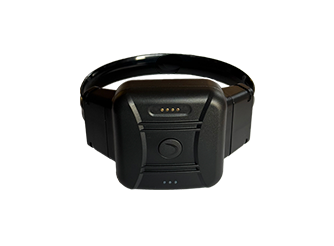
When you benchmark devices against those requirements, manufacturer-grade references help anchor procurement conversations. As one illustration of a one-piece device architecture aligned with the priorities above, CO-EYE ONE is specified at 108g with fiber-optic tamper detection on strap and case (supporting a zero false-positive tamper-alert design goal for that subsystem), plus roughly seven-day battery life in standalone cellular reporting modes under published manufacturer parameters—useful shorthand when you demand apples-to-apples comparisons from any vendor pitching your pretrial electronic monitoring panel.
For public-facing product context and photography tied to those specifications, see REFINE Technology’s overview of the CO-EYE ONE GPS ankle monitor on ankle-monitor.com.
5. Conclusion: treat monitoring like part of the bond, not a sidebar
The South Carolina disclosures are a reminder that bail monitoring failures become prosecutorial narratives. Whether or not individual bondsmen bear legal fault in this matter, the industry’s defense is operational: verify credentials, document enrollments, demand supplier transparency, and choose GPS ankle monitor stacks that keep courts confident when maps are questioned.
Agencies that invest early in vendor verification and evidence discipline will keep premium pricing power; agencies that chase lowest daily fees without governance will keep headline risk. The checklist above is a starting point—not a substitute for counsel, but a practical bridge between bond desk instinct and courtroom-grade accountability.
If you are rebuilding vendor panels after this news cycle, walk your team through the buying guide and vendor hub linked above, then schedule a compliance conversation with your attorney about bond-condition reporting duties in your state. The goal is simple: when a prosecutor asks who protected the community during a monitoring outage, your paperwork should already answer.
Next steps
Need help structuring monitoring requirements for your agency network? Contact REFINE ID for vendor-neutral guidance on bail bond GPS procurement and defendant workflow design.
Contact Sales