Blog
GPS Ankle Bracelet for Bail Bond Agencies: Complete Equipment Selection Guide 2026
A practical framework for choosing GPS ankle bracelet hardware that holds up in pretrial programs, reduces bail monitoring labor, and keeps electronic monitoring alerts court-defensible.
March 2026
1. Why the GPS ankle bracelet decision is a bail operations decision
When a court orders location supervision, your agency lives inside the GPS ankle bracelet workflow: enrollment calls, charging reminders, tamper escalations, and the occasional defense challenge about data quality. The same GPS ankle bracelet that looks acceptable in a vendor demo can become a daily tax on staff if battery life is short, tamper logic is noisy, or defendants cannot keep a two-piece kit paired. Treat the GPS ankle bracelet as infrastructure, not an accessory.
Many RFPs still use the broader label electronic ankle bracelet because statutes and contracts historically covered RF home detention. For pretrial defendant monitoring and modern bail monitoring, insist on GPS-class location payloads, map-ready timestamps, and geofence events. An electronic ankle bracelet without continuous or interval GNSS reporting may satisfy a checkbox but fail the supervision story your indemnitor expects. In practice, agencies often issue both terms—GPS ankle bracelet for marketing clarity and electronic ankle bracelet for legal alignment—while attaching the same technical acceptance tests.
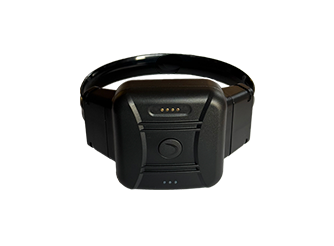
This guide walks through the specifications that matter for bail bond agencies: weight and comfort, battery and charging, tamper integrity, cellular survivability, waterproofing, architecture (one-piece vs two-piece), and total cost of ownership (TCO). We reference CO-EYE ONE as a leading one-piece GPS ankle bracelet example—108 g, about seven days of standalone battery at a five-minute interval on efficient LTE-M/NB-IoT-class service, fiber-based strap and case tamper sensing, magnetic charging, and IP68 sealing—so you have concrete numbers next to generic marketing claims. Validate every figure in your pilot with your monitoring center and court stakeholders.
2. Weight, ergonomics, and defendant acceptance
Heavier GPS ankle bracelet hardware correlates with more strap complaints, concealment attempts, and requests for medical exceptions. Agencies report that defendants tolerate a modern GPS ankle bracelet more consistently when bulk and mass approach consumer-wearable norms. When comparing any electronic ankle bracelet, ask for mass in grams, strap adjustability, and whether the enclosure forces an unnatural gait that increases abrasion.
CO-EYE ONE’s published 108 g one-piece layout is representative of the category direction: consolidate radios and battery in a compact ankle form factor instead of distributing mass across ankle and belt. For bail monitoring, simpler physics usually means fewer “device discomfort” calls that masquerade as compliance problems.
3. Battery life: the hidden driver of bail monitoring cost
A GPS ankle bracelet that demands daily charging creates predictable failure modes: dead batteries interpreted as flight risk, weekend gaps, and staff time spent re-establishing reporting. Multi-day endurance changes the supervision cadence—weekly charging aligns with many bail check-in schedules and shrinks the false “lost signal” queue.
Pair this section with our deep dive on 7-day battery bail monitoring and the procurement notes in bail bond GPS equipment buying guide. When vendors quote “long life,” demand the cellular mode, reporting interval, and temperature band those hours assume. A GPS ankle bracelet marketed with long standby time is not the same as a GPS ankle bracelet that actively reports location every few minutes for bail monitoring.
4. Tamper detection and court credibility
Electronic monitoring lives or dies on whether judges trust alerts. Strap-cut, case attack, and supervised removal events must be distinguishable from benign motion, shower humidity, or charging quirks. Traditional resistive strap circuits can generate false positives that train officers to ignore the panel—until a real event occurs.
Optical fiber tamper loops on high-end one-piece designs aim to eliminate false positives in the strap and case pathways; CO-EYE documents zero false positives for its fiber-based tamper architecture. Regardless of vendor, score pilots by confirmability: video + sensor graph + timestamp, not anecdote. Our false tamper alerts resource translates technical claims into bail bond operational policies.
5. Cellular connectivity and carrier sunset risk
Your GPS ankle bracelet is only as good as its registration on live networks. Legacy 3G dependence is a liability; modern GPS ankle bracelet portfolios should prioritize LTE-M and NB-IoT (5G-compatible LPWA) where carriers support them, with sane fallbacks where rural bail monitoring still demands older bands. Electronic monitoring contracts often span five years—ask vendors how they will handle module obsolescence and whether eSIM options exist for rapid carrier changes.
Agencies bundling bail bond GPS monitoring with defendant GPS tracking should align SIM logistics with their monitoring software onboarding. A disconnected GPS ankle bracelet is indistinguishable from a non-compliant defendant until someone investigates.
6. Waterproofing and daily life on pretrial release
Defendants shower, work outdoors, and live in humid climates. A GPS ankle bracelet without robust ingress protection will corrode charging interfaces and randomize power events—signals that look like tamper or absconding. Specify IP68 for any electronic ankle bracelet expected to stay on skin continuously. IP68 means the vendor stands behind immersion resistance within documented depth/time limits; still train clients on drying charging contacts.
7. One-piece vs two-piece GPS ankle bracelet architectures
One-piece GPS ankle bracelet systems integrate cellular modem, GNSS, battery, and tamper sensors in a single enclosure worn on the ankle. Two-piece kits pair a smaller ankle tag with a belt or pocket modem; supervision depends on short-range links staying alive.
One-piece reduces behavioral failure modes: no “I charged the modem but not the band” excuses, no Bluetooth dropouts that flood your bail monitoring queue. Two-piece can still fit specialized electronic monitoring programs, but policies must define separation grace, dual charging, and which component “owns” the court-ordered location stream. Read one-piece vs two-piece for a bondsman-friendly explainer and CO-EYE ONE product documentation for a flagship one-piece GPS ankle bracelet reference.
8. Per-day costs, platform fees, and TCO
Sticker prices mislead. Model TCO with (a) per-day electronic monitoring fees, (b) activation and strap kits, (c) shipping and RMA pools, (d) monitoring center seats, and (e) labor per ticket. A cheaper GPS ankle bracelet that doubles tamper investigations often costs more than a premium GPS ankle bracelet that stays on-air.
Use cost analysis spreadsheets when negotiating vendor proposals, and compare against home detention monitoring programs economics if courts mix curfew RF with GPS ankle bracelet tracks. Bail monitoring margins improve when devices fail less often and defendants comply with simpler charging rituals.
9. Software, alerts, and evidence packets
Hardware is half the story. Your GPS ankle bracelet feeds a platform that must export UTC-stamped tracks, geofence entries/exits, and tamper narratives suitable for hearings. Evaluate APIs, role-based access, audit logs, and whether the monitoring center can triage alert storms without muting real risk. Electronic monitoring vendors should be scored on export formats, not only map screenshots. Strong electronic monitoring stacks normalize device identifiers, firmware builds, and carrier registration events so defense counsel cannot ambush hearings with metadata gaps.
Whether you call the field device a GPS ankle bracelet or an electronic ankle bracelet, the electronic monitoring record must read as a single coherent narrative to judges and pretrial services. Bail monitoring supervisors should rehearse sample exports quarterly.
10. Procurement checklist for 2026
Summarize requirements in writing: GPS ankle bracelet mass and IP rating, standalone battery at defined intervals, cellular bands, tamper technologies, installation time (tool-less snap-on vs toolbox), and service SLAs. Run a 30-device pilot with blind tamper drills and dead-battery simulations. Compare results side-by-side before fleet commit.
Electronic ankle bracelet labels still appear in statutes—translate them into measurable GPS ankle bracelet acceptance tests so procurement, defense counsel, and the bench share the same expectations. For pretrial-specific workflows, cross-link your policies with defendant GPS tracking compliance guidance.

11. FAQ: GPS ankle bracelet selection
What is the difference between a GPS ankle bracelet and an electronic ankle bracelet?
A GPS ankle bracelet transmits satellite-derived location through cellular networks for continuous or interval tracking. An electronic ankle bracelet is a broader category that can include GPS, RF home-detection, or hybrid modes. For bail monitoring programs that require real-time maps and geofences, specify GPS-class reporting in your RFP even if vendors use the term electronic ankle bracelet.
How does bail monitoring economics change when GPS ankle bracelet battery life improves?
Daily-charge GPS ankle bracelet fleets generate more help-desk tickets, dead-battery gaps, and officer follow-ups. Multi-day standalone endurance aligns with weekly check-ins, reduces false lost-signal events, and lowers labor cost per supervisee—often more than the hardware price delta between generations.
Should bail bond agencies choose one-piece or two-piece GPS ankle bracelet systems?
One-piece GPS ankle bracelet designs integrate cellular, GNSS, battery, and tamper sensing in a single enclosure, simplifying defendant instructions and eliminating ankle-to-tracker Bluetooth separation failures. Two-piece kits can work when programs accept belt-worn modems and dual charging policies; procurement should score expected ticket volume and court-defensible alert quality, not brochure photos alone.
Why does waterproofing matter for a GPS ankle bracelet on pretrial release?
Courts expect continuous supervision through showers, weather exposure, and work environments. IP68-rated GPS ankle bracelet hardware resists water ingress that otherwise corrodes charging contacts and causes intermittent power faults that mimic tamper or absconding events.
12. Next steps
Ready to standardize on GPS ankle bracelet hardware that reduces bail monitoring labor and holds up under court scrutiny? Request a quote and map acceptance tests to your county’s pretrial orders.
Contact SalesPrimary product reference: CO-EYE ONE on ankle-monitor.com.