Blog
Electronic Tagging for Bail Bond Agencies: Essential Guide to GPS Ankle Bracelet Technology 2026
How electronic tagging maps to pretrial supervision, what bail bond agencies should demand from hardware and platforms, and how to roll out programs without drowning staff in false alerts.
April 2026
1. What is electronic tagging?
Electronic tagging is the supervised use of a wearable or app-linked device to enforce court release conditions—most often continuous or interval location reporting via a GPS ankle bracelet or similar ankle monitor. The tag (or phone program) connects defendants to a monitoring center, probation, pretrial services, or a bail agency’s vendor stack so violations surface as timestamped alerts instead of silent failures.
In the United Kingdom, Parliament, courts, and press routinely use the same vocabulary when discussing curfew RF tags and GPS tracks. In the United States, statutes and contracts more often read electronic monitoring or GPS monitoring, but the operational stack is the same: hardware, connectivity, policy, and evidence exports. For REFINE ID readers—bail bond agencies, indemnitors, and monitoring partners—the practical question is whether the court order requires map-grade tracks, home curfew only, alcohol screening, or a bundle.
When a judge orders location supervision as a bond condition, your workflow becomes enrollment, charging discipline, tamper triage, and sometimes defense challenges to data quality. Treat court-ordered tags as infrastructure that either reduces bail monitoring labor or consumes it. Align intake language with pretrial defendant monitoring systems expectations so defendants, attorneys, and clerks share one definition of “compliant.”
2. How electronic tagging works for pretrial supervision
Most pretrial programs built around court-ordered tags—including electronic tagging in the UK sense and GPS supervision in the US—fall into three families, often combined on a single docket:
GPS ankle monitor / GPS ankle bracelet. Satellite-derived positions are computed on-device or assisted by network data, then uplinked over cellular (often LTE-M or NB-IoT). Geofences, speed checks, and inclusion/exclusion zones feed bail monitoring queues. This is the default when courts want real-time maps and FTA risk reduction.
RF home-detection tagging. A base station or beacon proves presence during curfew hours. It is not a substitute for GPS when the order demands away-from-home tracking, but it can lower airtime cost for strict house arrest conditions.
Alcohol and biometric adjuncts. Transdermal or breath programs still fall under the broader supervised-sensor umbrella—but they solve a different risk vector than location. Your vendor matrix should list which modalities are native versus bolt-on.
Operationally, success depends on enrollment: capture baseline photos, strap sizing, skin checks, and written charging instructions in one sitting—before the defendant leaves your office or the vendor’s storefront. Miss that moment and you inherit preventable “I didn’t understand” callbacks that look like risk on paper. Map each court’s standard order to a device profile so clerks do not improvise modality at intake.
For a deeper operational frame, pair this section with our bail bond GPS monitoring guide and GPS ankle monitor technology reference on the manufacturer site when you need specification depth beyond agency policy.
3. Technology requirements for bail bond agencies
Procurement teams should translate court orders into acceptance tests. The following requirements apply to most GPS-class electronic tagging deployments:
Location accuracy and sampling. Ask for CEP or comparable horizontal accuracy under open sky and urban canyon test scripts, at the reporting interval you will run in production—not a best-case demo mode. Electronic monitoring evidence must survive basic cross-examination about gaps and drift.
Battery and charging. Daily-charge ankle monitor fleets inflate help-desk volume and dead-battery “false flight” events. Multi-day endurance at your chosen cellular mode aligns better with weekly check-in rhythms common in bail monitoring.
Tamper integrity. Strap-cut and case-attack signals should be distinguishable from shower humidity, cable wobble, and charging quirks. Score pilots on confirmability—graphs, UTC stamps, and video policy—not anecdotes.
Connectivity roadmap. Supervision contracts for tagged defendants often span years. Confirm LTE bands, LPWA support, and how vendors handle module sunsets. Disconnected tags look like noncompliance until someone manually reconciles carrier status.
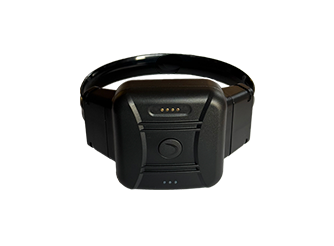
As an example of modern one-piece hardware suitable for high-liability pretrial supervision, CO-EYE ONE publishes a 108 g enclosure, about seven days of standalone battery at efficient LTE-M/NB-IoT reporting intervals, fiber-optic strap and case tamper sensing (documented zero false positives for that fiber path), magnetic charging, IP68 sealing, and sub‑2 m-class GPS per REFINE Technology’s published CO-EYE ONE specifications—use it as a benchmark when scoring proposals, then validate in your own pilot. Compare that profile to legacy two-piece kits that split modem and ankle transducer: pairing drops and dual charging often drive hidden labor in electronic monitoring operations.
Use electronic monitoring vendors evaluation criteria and our GPS provider questions article when shortlisting platforms.
4. One-piece vs two-piece GPS ankle devices
Architecture choice shapes defendant behavior, charging SOPs, and alert noise. The table below summarizes how bail agencies usually experience each design under real-world supervision workloads.
| Dimension | One-piece GPS ankle bracelet | Two-piece GPS / modem kit |
|---|---|---|
| Form factor | Cellular, GNSS, battery, and tamper sensors in one ankle-worn enclosure. | Ankle tag plus belt/pocket modem linked by short-range radio (often Bluetooth). |
| Charging | Single cradle or magnetic lead—simpler defendant instructions. | Two batteries, two routines; higher risk of partial charge. |
| Failure modes | Carrier or hardware faults; fewer “lost link” excuses. | Separation events and pairing loss can flood bail monitoring queues. |
| Court narrative | One device ID maps cleanly to the order. | Policies must define which component is the system of record. |
| Representative benchmark | CO-EYE ONE: 108 g, ~7-day battery (stated interval), fiber tamper, <2 m GPS (vendor specs). | Traditional two-piece: dependent on modem proximity and dual power management. |
Neither layout is automatically “wrong”—but when electronic tagging orders demand map-grade accountability, agencies usually standardize on one-piece GPS ankle bracelet hardware unless a court explicitly authorizes a split architecture.
5. Cost analysis: electronic tagging for bail bond operations
Electronic tagging TCO includes per-day fees, activation kits, shipping and RMA pools, monitoring seats, and labor per ticket—not sticker price alone. A lower device lease that doubles tamper investigations or dead-battery callbacks can erase margins on bail monitoring.
Model scenarios for your county mix: urban cellular stress, rural dead zones, weekend coverage, and export prep for hearings. When courts blend curfew RF with GPS, reconcile line items against home detention monitoring programs economics so defendants and indemnitors see one coherent bill narrative.
Detailed worksheets and sensitivity tables live in our cost analysis resource—use them before you sign multi-year electronic monitoring agreements.
Also stress-test assumptions with your indemnitors: if a GPS ankle monitor failure triggers a rearrest narrative, who pays transport, court time, and replacement hardware? Clear supervision fee schedules reduce disputes when programs are defendant-funded. Where counties subsidize slots, reconcile reporting so bond agents are not caught between a vendor invoice and a delayed county reimbursement.
6. Implementing electronic tagging programs: step-by-step
- Inventory court orders: map each template to required modalities (GPS, RF, alcohol) and evidence standards.
- Publish internal definitions so staff say electronic tagging, GPS ankle bracelet, and ankle monitor consistently in defendant-facing materials.
- Run an RFP against the technology requirements above; include blind tamper drills and battery-down simulations.
- Negotiate SLAs for alert acknowledgement, data retention, and export formats compatible with counsel review.
- Pilot 20–40 subjects across risk tiers; compare ticket volume per 100 defendants versus legacy ankle hardware.
- Train intake staff on charging, skin checks, and escalation trees; rehearse after-hours on-call.
- Fleet-scale with spare ratio, firmware policy, and quarterly evidence packet audits.
Throughout rollout, keep bail monitoring leadership aligned with pretrial services and clerks so condition language in bond paperwork matches what the platform can objectively prove.
After go-live, review weekly dashboards for the first ninety days: median time-to-first-charge, tamper tickets per hundred defendants, and export turnaround for counsel requests. Programs that treat tagged caseloads as a living operations problem—not a set-and-forget vendor handoff—see faster stabilization and fewer bench hearings triggered by ambiguous data.

7. FAQ: electronic tagging for bail bond agencies
What is electronic tagging in the context of bail bond and pretrial supervision?
Electronic tagging is the use of a court-ordered wearable or app-based device—commonly a GPS ankle bracelet or ankle monitor—to verify location, curfew, or sobriety during pretrial release. In the UK the term is statutory and cultural; in the US, electronic monitoring and GPS monitoring are parallel labels for overlapping programs.
How does electronic tagging differ from GPS-only bail monitoring?
The umbrella term covers GPS bail monitoring as the location-heavy subset. RF curfew tags and alcohol bracelets sit alongside it when courts order those sensors. Match the modality to the written condition.
What should bail bond agencies require in an electronic tagging RFP?
Require reporting interval, tested horizontal accuracy, battery hours at that interval, tamper architecture and false-positive handling, IP rating, cellular roadmap, evidence exports, and monitoring center SLA. Tie each line to your pretrial templates.
Is one-piece or two-piece hardware better for electronic tagging programs?
One-piece GPS ankle bracelet designs usually reduce pairing and dual-charging failure modes. Two-piece kits can work when policies define separation grace and system-of-record rules.
How long does it take to launch an electronic tagging program?
Expect roughly eight to sixteen weeks from vendor selection through pilot, depending on contracts, insurance, inventory, and court coordination. Lead with acceptance tests, not marketing decks.
Next steps
Standardize hardware and playbooks for electronic tagging that cut false alerts, keep GPS ankle monitor data hearing-ready, and protect bail monitoring margins. Request pricing and pilot terms when you are ready to compare vendors side by side.
Contact SalesProduct reference: CO-EYE ONE on ankle-monitor.com.