GPS Monitoring Technology
GPS Ankle Monitor Battery Life Comparison: Why 7-Day Battery Changes Everything for Bail Bond Monitoring
A generation-by-generation look at GPS ankle monitor battery life—and what longer runtime means for defendants, monitoring staff, and bail bond operations.
Published March 23, 2026 · 10 min read
1. Why Battery Life Is the #1 Operational Concern
When bail bond agencies and pretrial programs evaluate GPS ankle monitors, conversations often start with maps, geofences, and court reports. In daily operations, though, battery life is what determines whether supervision feels manageable—or like a constant fire drill.
According to research summarized by the National Institute of Justice (NIJ), electronic monitoring is far less expensive than incarceration; the cost of imprisonment has been estimated at roughly six times higher than electronic monitoring for comparable supervision goals. That macroeconomic point matters because agencies are under pressure to supervise more people with finite staff. A device that fails because of power management does not deliver those savings—it creates new work: calls, home visits, and documentation.
For bail bond monitoring specifically, the stakes are personal and immediate. A dead battery can look like non-compliance, trigger escalation, and strain the relationship between the defendant, the bondsman, and the monitoring vendor. Bail bond GPS monitoring works best when the technology fades into the background; short battery life does the opposite.
This guide compares GPS ankle monitor battery life across technology generations, explains how power constraints shape day-to-day bail operations, and quantifies the hidden labor cost of “charge every night” programs. For a deeper dive into weekly charging workflows, see our companion piece on 7-day battery life for bail monitoring.
2. Battery Life by Technology Generation
How long does an ankle monitor battery last? The honest answer is: it depends on the hardware generation, cellular radio, GPS duty cycle, and how aggressively the vendor manages sleep states. The table below summarizes typical expectations by era—use it as a conversation starter with vendors, not as a substitute for written specifications under your reporting interval and climate.
| Generation | Era | Typical runtime | Operational reality |
|---|---|---|---|
| First gen | 2000s | ~12–18 hours | Required frequent charging and often home charging units or docks; defendants had to plan life around the outlet. |
| Second gen | 2010s | ~24–48 hours | Daily charging became the norm; “forgot to charge” became one of the top support tickets. |
| Third gen | 2020s | ~3–5 days | Reduced charging frequency and fewer weekend failures, but still misaligned with weekly bail check-in rhythms for many agencies. |
| Current gen | Late 2020s+ | 7+ days (often at 5-min intervals) | One-piece GPS designs using LTE-M / NB-IoT can reach roughly seven days of operation at five-minute reporting intervals when power architecture and battery capacity are matched to the use case. |
Capacity context. Many legacy GPS ankle monitors shipped with roughly 800–1200mAh batteries—enough for a day or two of aggressive cellular and GPS use. Current-generation hardware often moves to 1700mAh or more, paired with radios that sip power between fixes. Together, that is what makes “7-day battery ankle monitor” a realistic procurement requirement instead of a marketing stretch goal.
Sealed enclosures. Modern devices commonly target IP68 waterproofing, meaning the unit can survive submersion in testing. Practically, that implies a fully sealed battery compartment: no swapping cells in the field. Reliability goes up, but efficient charging design (magnetic contacts, fast recharge curves) becomes non-negotiable.
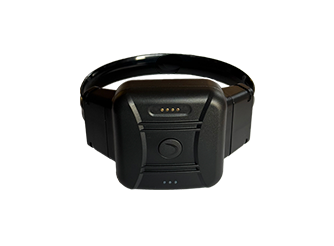
For hardware that exemplifies current-gen power engineering, see the CO-EYE ONE GPS ankle monitor product overview on ankle-monitor.com.
3. How Battery Affects Bail Bond Operations
Defendant GPS tracking only works when the device is on, connected, and reporting on schedule. When battery life is short, three operational failure modes dominate:
Missed check-ins and “silent” devices. Defendants juggling jobs, childcare, and unstable housing forget nightly charging. The strap is still on—but the modem is dark. Supervision dashboards show gaps; staff must triage whether the cause is signal, tamper, travel, or simply an empty battery.
False low-battery and tamper cascades. Industry discussions often cite $150–$300 per officer or field response for investigations triggered by alerts that turn out to be benign. Low-battery conditions and marginal voltage can contribute to alert storms that feel like tamper events. Even when the root cause is power, someone still has to verify—which burns time and erodes trust with the defendant.
Officer and monitoring center load. Every ambiguous alert becomes a phone tree: monitoring center → bondsman → defendant → maybe law enforcement. Short battery life increases the baseline rate of those touches. Over a year, that is hundreds of hours of labor that never show up on the device invoice.
Bond agents should also watch for weekend and holiday skew. Daily-charge programs fail most often when courthouses and reporting offices are closed—precisely when defendants fall out of their weekday routines. A 7-day battery ankle monitor gives you buffer through Saturday and Sunday without forcing defendants to remember a charger during travel, overtime shifts, or family emergencies. That margin matters because electronic supervision is as much about predictable behavior as it is about perfect compliance.
4. The Hidden Cost of Short Battery Life
Translate battery policy into touchpoints—how often your operation must successfully interact with each defendant just to keep devices alive.
Suppose you supervise 100 active GPS ankle monitors. With a legacy program that effectively requires daily charging, you are implicitly managing 100 charging touchpoints per day—roughly 700 per week, assuming perfect compliance. In the real world, imperfect compliance turns many of those into two touches (reminder call + follow-up).
Now compare a 7-day battery program aligned with weekly charging: the same 100 defendants still need 100 successful charges per week (one per device), but that is roughly 14 charging touchpoints per day on average if workloads are spread across the week—versus 100 charging touchpoints per day when every device must hit the charger nightly.
Stated plainly: 100 daily charging touchpoints vs. ~14 daily touchpoints (averaged from a weekly cycle) is the operational difference at fleet scale. In weekly totals, that is 700 charging events per week for a strict daily-charge policy versus 100 charging events per week for a weekly-charge policy—a 7× reduction in required charging completions across the fleet. Even if only 10% of daily charges fail without escalation, that is 70 incidents per week vs. 10—before you count duplicate attempts.
Pair that with alert costs. If short-battery behavior generates even a handful of extra tamper investigations per week at $150–$300 each, the annual line item rivals premium hardware price differences. Longer GPS ankle monitor battery life is not a comfort feature; it is a workload throttle.
Finally, model training and call-center time. New defendants need clear instructions: when to charge, what the LED or vibration means, and who to call first when an alert fires. Shorter runtime means those instructions must be followed every single day—forever. Programs that standardize on weekly charging can invest the same training hours once and see compounding returns because the habit loop is simpler to remember and audit.
5. What to Ask Your Monitoring Provider About Battery
Use this checklist in RFPs and renewal negotiations. If answers are vague, assume the worst-case runtime.
- Stated conditions: What reporting interval, cellular mode (LTE-M, NB-IoT, LTE, 3G), temperature range, and motion profile were used for the published runtime?
- Standalone vs. tethered: Is the quoted life for standalone cellular/GPS, or a BLE-tethered mode that shifts burden to a phone?
- Battery capacity and chemistry: What mAh rating and cell type? Is the pack sealed for IP68?
- Recharge time and method: How long to full charge? Magnetic vs. dock vs. proprietary cradle—what breaks in the field?
- Low-battery alerting: How early does the platform warn defendants and agents? Are thresholds adjustable?
- Alert semantics: How does the system distinguish low battery from strap tamper or jamming?
- Spares and swap policy: If a device degrades below 80% health, what is the replacement SLA?
6. FAQ
How long does an ankle monitor battery last?
It depends on the device generation and reporting settings. Legacy GPS ankle monitors often lasted 12 to 48 hours between charges. Current-generation one-piece devices using LTE-M or NB-IoT can achieve 7 or more days at 5-minute reporting intervals with larger batteries (typically 1700mAh or more). Always confirm the vendor's stated conditions: interval, cellular mode, and temperature range.
Why is GPS ankle monitor battery life important for bail bond monitoring?
Short battery life forces daily charging, which creates missed check-ins, low-battery alerts that look like compliance failures, and staff time spent investigating false alarms. Longer battery life reduces touchpoints with defendants, aligns with weekly bail workflows, and lowers operational risk for agencies and sureties.
What is a 7-day battery ankle monitor?
A 7-day battery ankle monitor is a GPS electronic monitoring device designed to operate for at least one week on a single charge under defined real-world conditions—commonly including cellular transmission and periodic GPS fixes, for example at 5-minute intervals, using low-power cellular such as LTE-M or NB-IoT and a higher-capacity sealed battery.
Does waterproofing affect ankle monitor battery design?
Yes. IP68 waterproof ratings mean the enclosure can survive submersion; reputable designs use a fully sealed battery compartment without user-accessible cells. That improves reliability in showers and weather but makes battery quality and power efficiency even more important because field swaps are not an option.
Next Step
Longer GPS ankle monitor battery life reduces charging failures, shrinks alert noise, and aligns device maintenance with how bail bond businesses already schedule defendant contact. If you are comparing vendors, start with written runtime assumptions—then model weekly touchpoints the way you would model premiums.
Contact Sales