The FTA Problem for Bail Bond Agencies
Failure to appear is more than a courtroom inconvenience—it is balance-sheet risk. When a client misses court, agencies face bond forfeiture motions, collateral calls, and recovery costs. Industry experience and court-management literature commonly cite broad failure to appear rates in the 15–30% range for certain caseloads, depending on charge class, local warrant practices, and whether defendants receive structured reminders. Even at the low end of that band, expected losses across a book of business are material.
Courts increasingly expect pretrial monitoring and electronic monitoring options that preserve appearance rates without defaulting to jail. For bail professionals, that shift is an opportunity: agencies that can document lower FTA rates through supervised release packages strengthen relationships with judges, pretrial services, and indemnitors. The operational question is which stack—hardware, software, and workflows—delivers the largest FTA reduction per dollar. Our FTA reduction guide collects baseline metrics agencies should track before expanding supervision.
From a surety perspective, FTA is not only the face value of the bond—it is legal defense against forfeiture, investigator time, rearrest coordination, and reputational drag with clerks who remember which agencies reliably produce defendants. Quantifying those soft costs in your internal playbook makes it easier to justify monitoring staff, after-hours alert coverage, and capital tied up in spare devices. Even modest improvements in appearance rates compound across hundreds of annual releases.
Technology Solutions: Reminders, GPS, and the Combined Stack
Two intervention classes address different failure modes. Calendar reminders reduce accidental FTA: defendants who intend to comply but lose track of dates. GPS ankle monitors address flight risk, zone violations, and tampering—behaviors that reminders alone cannot solve.
Court reminder programs documented by the National Center for State Courts (NCSC) in the 2018-era body of work on hearing notifications—including implementations such as Hennepin County, Minnesota's eReminder-style systems—associated automated text and email outreach with large reductions in missed hearings, with some evaluations reporting on the order of a ~30% improvement in appearance outcomes where reminder uptake was strong. Results vary by jurisdiction, message timing, and language access, but the directional finding is consistent: low-cost nudges move the needle.
GPS supervision adds a continuous accountability layer. When bail bond GPS tracking is paired with the same reminder discipline courts use in pretrial programs, agencies attack both "forgot the date" and "left the jurisdiction" failure modes. Unified platforms that centralize device alerts, geofences, and defendant-facing notifications reduce the coordination tax on small monitoring shops. For a deeper dive on GPS program design, see how pretrial GPS monitoring reduces FTA and our pretrial defendant monitoring systems overview.
Implementation detail matters as much as hardware choice. Reminder programs work best when messages arrive at predictable intervals (one week, 48 hours, morning-of), offer clear instructions on courthouse entry and parking, and support multiple languages. GPS programs work best when geofences are drawn with prosecutor-approved language, when curfew windows match the written order, and when escalation playbooks define who calls the defendant first versus who files an immediate bench report. Bail agencies that mirror pretrial services discipline—rather than treating monitoring as a passive monthly fee—see the strongest bail monitoring GPS FTA outcomes.
How GPS Monitoring Reduces FTA
GPS electronic monitoring changes behavior because location truth is visible to the supervising agency in near real time. For bail workflows, four mechanisms matter most:
- Continuous location tracking: Movement timelines show whether a defendant is maintaining home, work, and treatment patterns—or drifting toward non-compliance before a warrant is necessary.
- Geofence alerts: Exclusion zones (victim addresses, schools, bars where ordered) and inclusion zones (curfew anchors) generate officer-facing alerts when a defendant approaches or breaches court-ordered boundaries.
- Court-day monitoring: On hearing mornings, analysts can verify that the device is en route to the courthouse corridor rather than crossing county lines—turning "we think he might appear" into an evidence-backed operational picture.
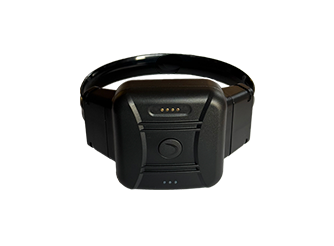
- Tamper detection: Strap and case integrity signals must be trustworthy; false tamper storms erode judicial confidence and burn staff hours. Fiber-optic tamper architectures on devices such as the CO-EYE ONE are designed for zero false-positive tamper reporting on the optical strap and case paths (per manufacturer specifications), keeping supervisors focused on genuine removal attempts.
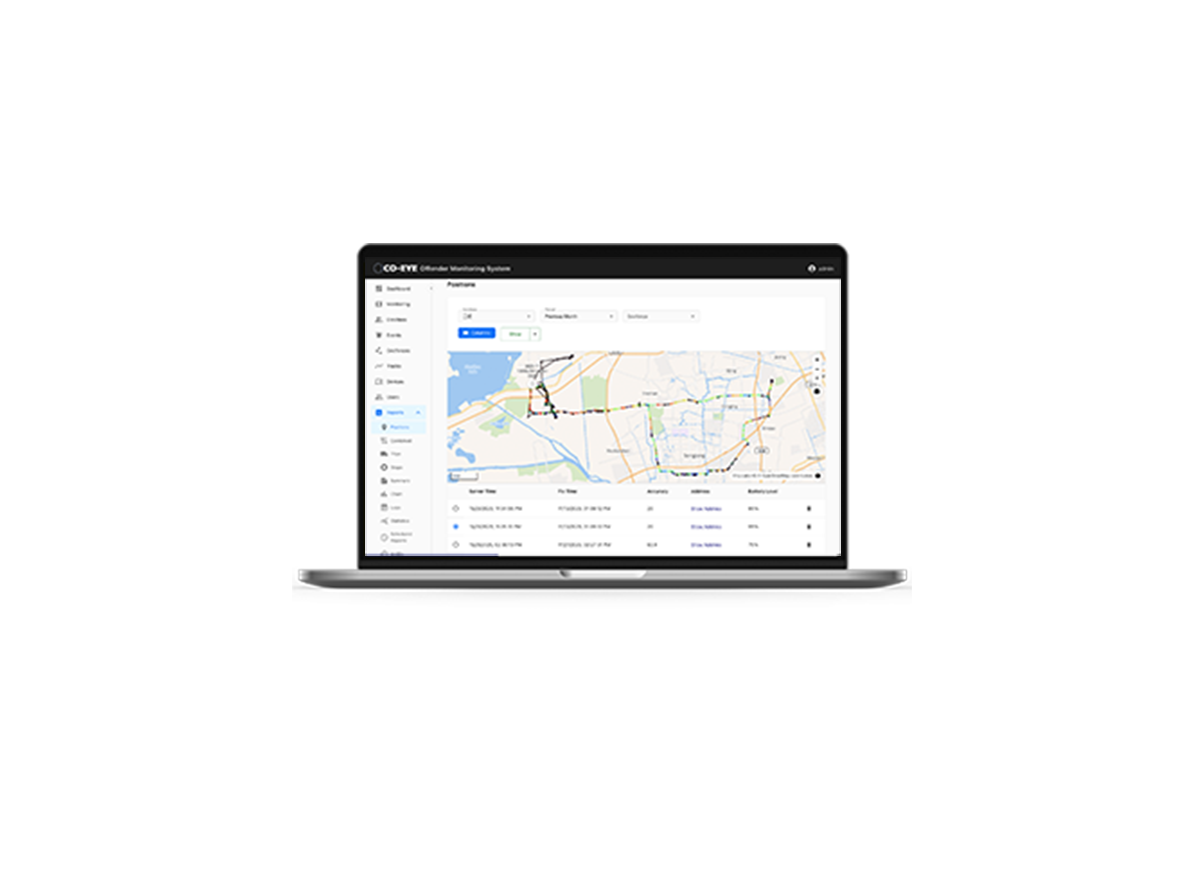
Pairing hardware with capable software is non-negotiable. Alert routing, acknowledgment logs, and prosecutor-ready exports belong in the same system that manages the ankle monitor fleet. The CO-EYE monitoring platform exemplifies the integrated model agencies should demand in RFPs—see also defendant GPS tracking compliance for operational checklists.
Smartphone App Benefits for Bail Agencies
Supervised smartphone apps are not a replacement for every GPS ankle monitor case, but they are a powerful complement. The American Probation and Parole Association (APPA) has repeatedly emphasized mobile tools as part of modern community supervision—photo check-ins, schedule acknowledgments, and secure messaging appeared in APPA-facing guidance and conference programming around the 2020 period as programs digitized field reporting. Together with NCSC reminder evidence, the case for dual-channel communication (court notifications + agency app workflows) is strong.
Practical benefits for bail agencies include:
- Automated court date reminders pushed through a defendant-facing app reinforce NCSC-style nudges with agency branding and two-way acknowledgment.
- Remote check-ins reduce foot traffic at bond offices while preserving a time-stamped compliance record for courts.
- Document submission (pay stubs, employer letters, treatment attendance) accelerates motions to modify conditions—reducing friction that sometimes precedes FTA.
- Lower daily cost versus full GPS hardware for defendants who are objectively low flight risk but still need structured accountability.
The CO-EYE AMClient app illustrates the category: continuous smartphone location where court orders allow, SOS workflows, and BLE-tether options when programs pair phones with wrist-worn tags. Explore how this fits bail monitoring GPS FTA tiers in our bail bond GPS monitoring guide.

Cost-Benefit Analysis: Forfeiture vs. Supervision Spend
Bail monitoring GPS FTA math is a comparison between recurring supervision expense and catastrophic forfeiture tails. Typical commercial brackets (market dependent) run roughly $5–$25 per day for full GPS electronic monitoring programs that include cellular airtime, device depreciation, and analyst time, and roughly $2–$5 per day for smartphone-centric supervision tiers that do not require a dedicated ankle-worn cellular unit.
Contrast that with a single bond forfeiture event: even mid-four-figure bonds scale quickly when collateral is thin, and five-figure to six-figure exposures are routine on commercial surety lines. A $10,000–$100,000+ forfeiture risk dominates the P&L of a monitoring line item over a 60- or 90-day pretrial window. If combined reminders and GPS shave even a few percentage points off baseline FTA, the payback often exceeds the entire technology budget for the year. Use our cost analysis and 2026 GPS monitor cost guide to stress-test ownership vs. lease models.
Consider a simplified scenario: 150 active defendants, blended historical FTA of 20% without structured supervision, and average bond exposure of $15,000 on monitored cases. Expected gross exposure from FTA events is substantial even before legal costs. Adding GPS at $12/day for 90 days costs about $1,080 per defendant—$162,000 if applied to all 150—but agencies rarely monitor every client at full GPS intensity. A hybrid model might put 40 high-risk defendants on GPS ($43,200 for 90 days) and run reminder-plus-app supervision on another 60 at $3/day ($16,200). Total outlay of roughly $59,400 is still small versus a handful of avoided forfeitures. If the stack cuts effective FTA from 20% to 14% (a conservative 30% relative reduction), the expected count of FTA events falls materially—often enough to fund the entire program from recovered collateral alone.
| Supervision mode | Indicative daily cost | Best FTA risk addressed |
|---|---|---|
| GPS ankle monitor + platform alerts | $5–$25/day | Flight risk, zone violations, tamper |
| Smartphone app + reminders | $2–$5/day | Accidental FTA, light-touch check-ins |
| Combined GPS + app reminders | Sum of components (often discounted) | Full spectrum pretrial monitoring |
| Unguarded release | $0 direct—highest forfeiture tail | None |
Choosing the Right Solution: Risk-Based Supervision
One-size-fits-all monitoring fails because defendants differ in flight incentives, criminal history, community ties, and victim-safety dynamics. A practical matrix:
- High flight risk: Deploy a full-time GPS ankle monitor with live geofences, tamper integrity, and rapid escalation paths. Add smartphone reminders as a secondary channel, not the primary sensor.
- Medium risk: Consider smartphone supervision with BLE tether or part-time location rules, paired with exclusion zones where courts require them. Escalate to GPS hardware if compliance slips.
- Low risk: Structured reminder programs (NCSC-style), app-based acknowledgments, and light check-ins may suffice—provided indemnitors and courts agree on the tier.
Document the rationale for each tier. When judges see a clear, evidence-based bail bond GPS tracking policy, they are more likely to approve monitoring in lieu of detention—expanding the addressable caseload for agencies that invest in technology credibly. Vendor-neutral procurement frameworks live in electronic monitoring vendors and the RFP template.
Operational Checklist Before You Scale
Agencies launching or expanding bail bond GPS tracking should lock a few process controls first: written consent and fee disclosures aligned with state regulations, a 24/7 or extended-hours alert desk with defined response times, charger and strap inspection protocols, and prosecutor-ready PDF exports that show device continuity on court days. Train bond agents to explain the difference between "the app reminds you" and "the ankle monitor proves location" so defendants—and judges—understand why both layers sometimes apply. Finally, sync with home detention monitoring programs where house arrest is part of the release order; geofence rules should match the written conditions verbatim.
Bottom Line
Bail monitoring GPS FTA improvement is not theoretical: court reminder studies (including NCSC's 2018-era documentation of programs such as Hennepin County's eReminder approach) show large appearance gains, while GPS electronic monitoring supplies the continuous integrity layer bail agencies need on higher-risk bonds. Stack both, tune by risk tier, and measure FTA before and after—you will usually find that the combined approach costs a fraction of a single forfeiture event. When you are ready to spec hardware and software, Contact Sales for platform and device options aligned to pretrial programs.
Deploy bail monitoring GPS FTA programs with confidence